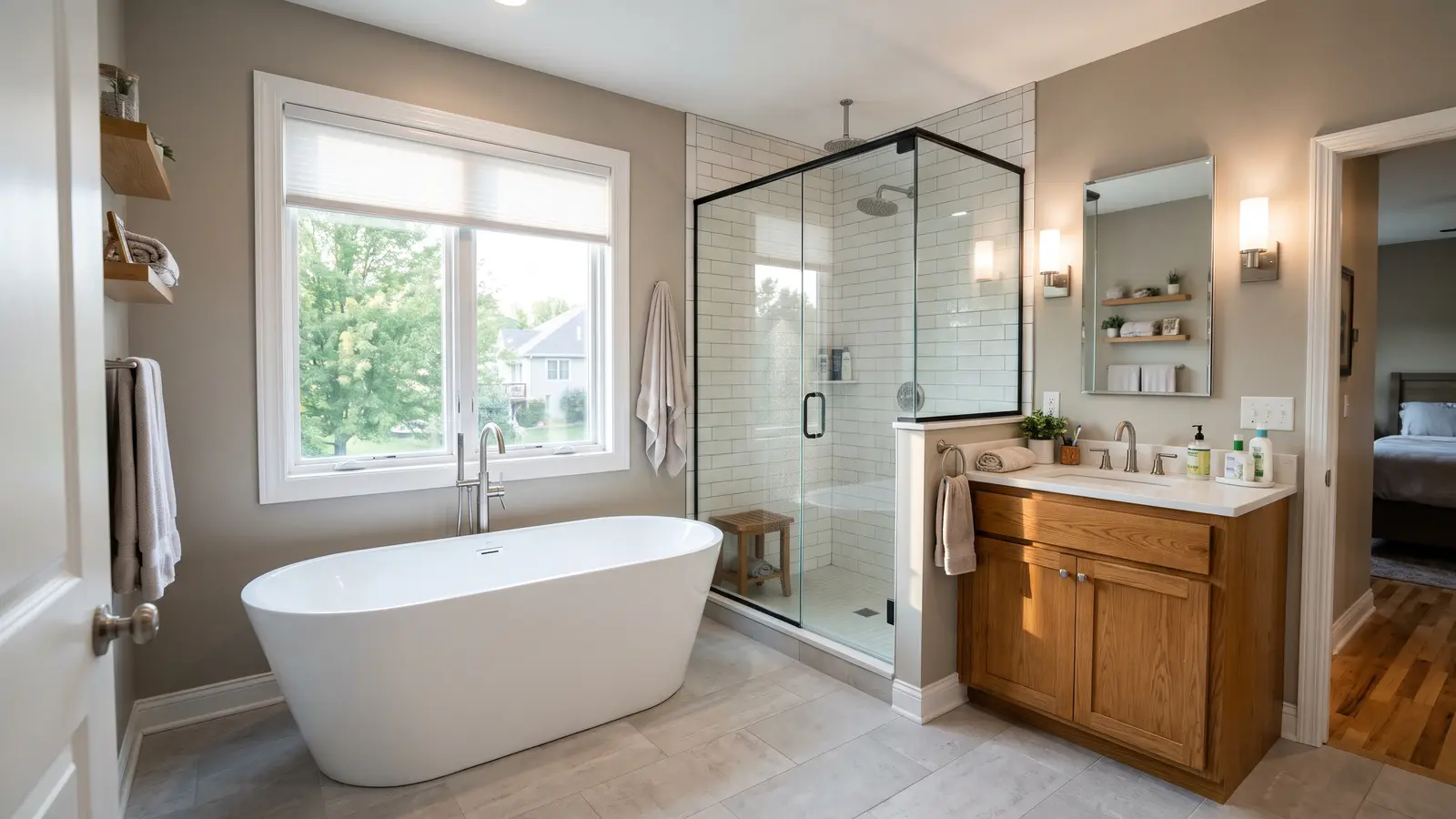
What does a tub-to-shower conversion cost?
Most tub-to-shower conversions in the Fort Wayne area cost $6,000 to $14,000, including labor, materials and permit. The spread comes down to a few choices:
| Option | Typical cost | Notes |
|---|---|---|
| Acrylic or solid-surface walls, same footprint, sliding glass door | $6,000 – $9,000 | Fastest install, no grout to clean |
| Panel walls with a low-threshold base, seat and grab bars | $8,000 – $11,000 | Popular for aging in place |
| Fully tiled shower with a niche, same footprint | $9,000 – $13,000 | More design choice, more labor |
| Curbless tiled shower with frameless glass | $11,000 – $14,000+ | Floor work and custom glass |
These are typical ranges, not quotes. Your price depends on your bathroom and what’s behind its walls.
What makes a conversion cheaper?
- Keep the footprint. Putting a 60-inch shower base where the 60-inch tub was is the most efficient conversion. The drain stays close to the same spot.
- Use a wall panel system. Acrylic or solid-surface panels install in a day or two and skip grout entirely. Compare them in acrylic vs. tile showers.
- Choose a sliding or pivot door. Standard semi-frameless doors cost much less than custom frameless glass.
- Leave the rest of the bathroom alone. If the vanity, toilet and floor are in good shape, there’s no need to replace them just because the tub is going.
What makes it more expensive?
- Moving the drain. A shower drain usually needs to sit in a different spot than the tub drain did. On a slab or with a finished ceiling below, getting there costs more.
- Going curbless. A zero-threshold entry means recessing the floor and extending the waterproofing past the shower. It looks great and works well, and it takes more work.
- Tile. Full tile walls, niches and benches add material and several days of labor.
- Frameless glass. It’s measured after the tile is done and made to fit.
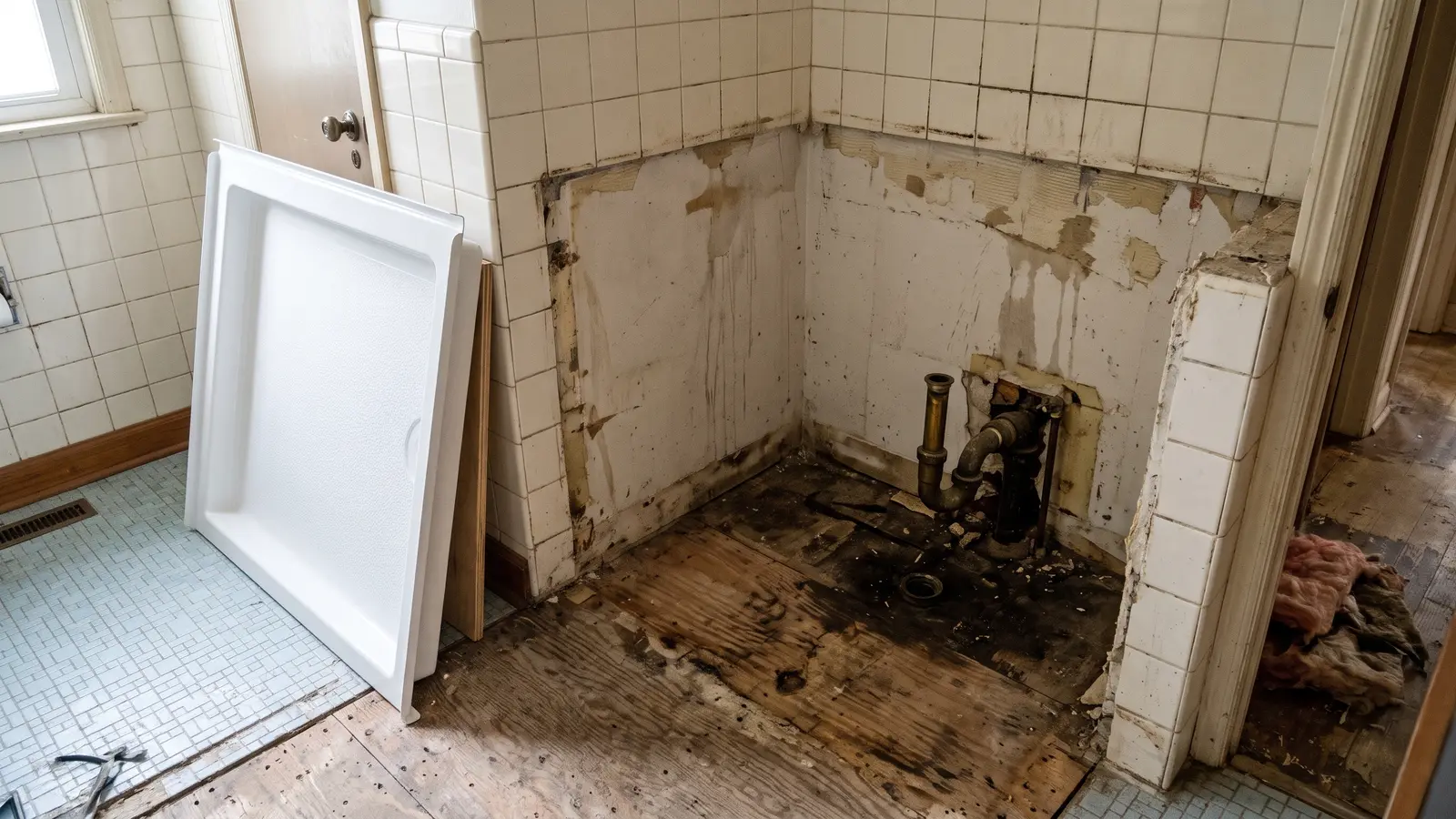
- Repairs behind the tub. Older Fort Wayne homes often have rotted subfloor, corroded galvanized supply lines or a cast-iron tub that has to be broken up to get out.
Do you need a permit?
Usually, yes. Replacing the tub with a shower means new drain and valve work, which counts as plumbing. In Fort Wayne, plumbing permits come from the Allen County Building Department, not the city. We include the permit and inspections in our tub-to-shower conversions. For the details, read Fort Wayne bathroom permits.
Will removing the tub hurt resale value?
This is the question we hear most. The honest answer depends on the rest of the house:
- If another bathroom keeps a tub, converting one bathroom to a walk-in shower is generally fine, and many buyers see it as an upgrade.
- If it’s the only bathtub in the house, some buyers will notice, especially families with young children. In a three-bedroom house with one full bath, keeping a tub may be the safer resale choice.
We go deeper in walk-in shower vs. bathtub.
Why are so many homeowners getting rid of their tubs?
- Most adults don’t take baths. A tub mostly gets used as a shower with a high wall to step over.
- Safety. Stepping over a tub wall gets harder with age, surgery or mobility issues. A low-threshold or curbless shower with a seat and grab bars is easier to use every day. See accessible bathrooms.
- Space. A 5-foot alcove shower with glass feels much bigger than a tub with a curtain.
- Easier cleaning. A shower is easier to keep clean than tub corners and an old surround.
What does a conversion include, line by line?
A complete conversion quote should cover each of these. If a bid leaves one out, ask why:
| Line item | What it covers | Typical share of cost |
|---|---|---|
| Demolition & disposal | Removing the tub, surround and damaged drywall; haul-away | 5–10% |
| Plumbing | New shower drain and trap, new or relocated valve, supply connections | 15–25% |
| Shower base | Acrylic, solid-surface or a tiled mortar pan | 10–15% |
| Walls & waterproofing | Panel system, or backer board + membrane + tile | 25–40% |
| Door or glass | Sliding, pivot, or frameless custom glass | 8–15% |
| Accessories | Niche, seat, grab bars, handheld shower | 3–8% |
| Permit & inspections | Allen County plumbing permit | 1–3% |
Two quotes can look thousands of dollars apart until you line them up row by row. One may include waterproofing and a new valve, while the other quietly reuses the old valve. An itemized quote is the only fair way to compare.
What should you choose for the shower base and entry?
- Standard low-threshold base (about 3–4 inches high): the most affordable choice and easy to step into for most people.
- Ultra-low threshold base (about 1–2 inches high): close to curbless without recessing the floor, which makes it a good choice for aging in place.
- True curbless: the floor is recessed so the shower floor sits level with the bathroom floor. It’s the most work, and it’s ideal for walkers or wheelchairs.
If accessibility is part of the reason you’re converting, plan for blocking behind the walls so grab bars can be added anytime, even if you don’t install them now.
How long does a conversion take?
Most conversions take 3 to 6 working days on site, plus a short wait for glass if you choose custom. Tile pushes it toward the longer end. See the full bathroom remodel timeline.
How do you get an exact price?
We measure the alcove, check the drain location and the floor below, and write up an itemized quote that separates the shower base, the walls, the glass, the plumbing and the permit. That way you can see what each upgrade adds. Get a free quote.