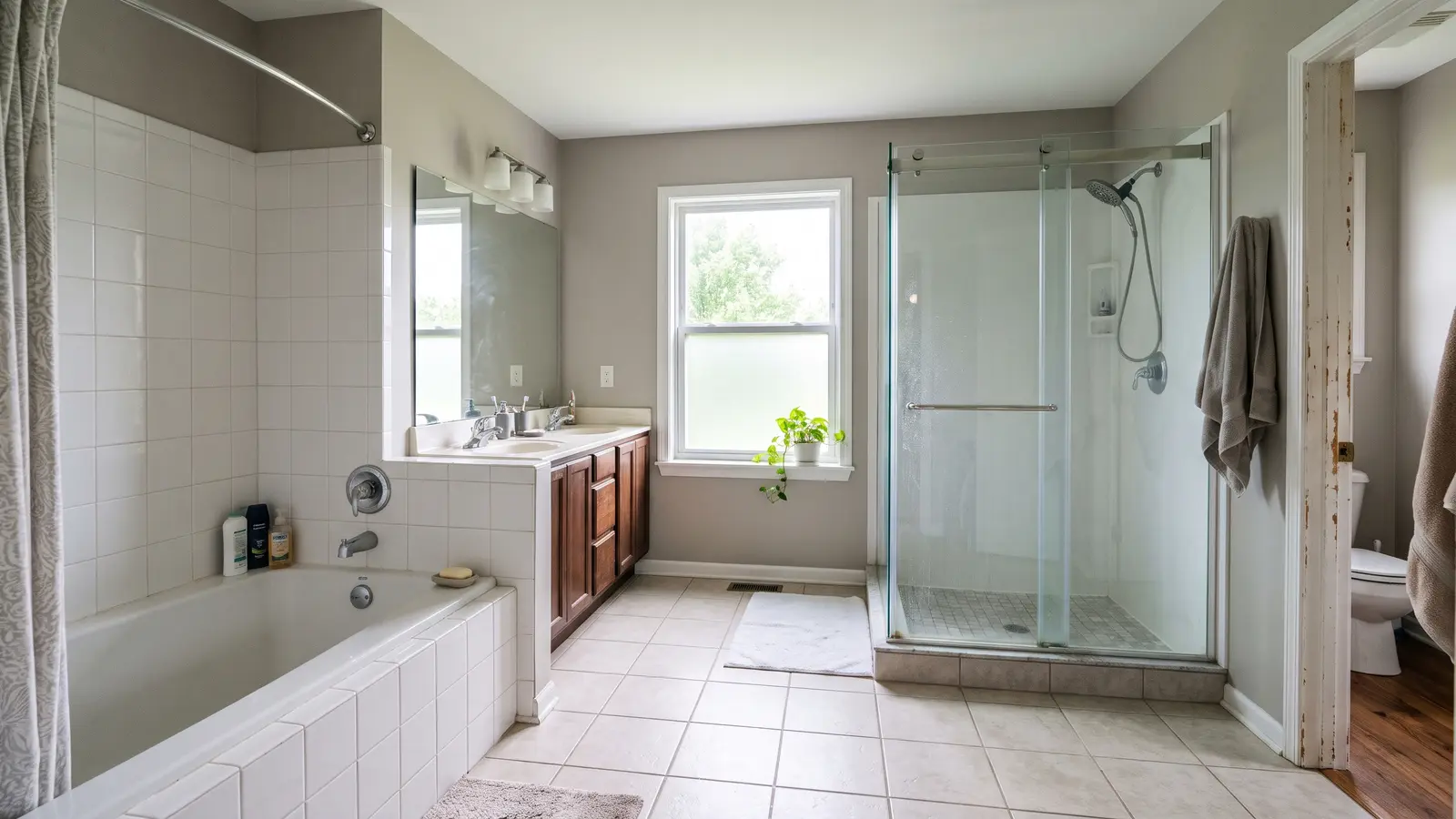
Walk-in shower vs. bathtub: which should you keep?
Replacing a tub with a walk-in shower is one of the most common projects we quote in Fort Wayne. It's often a great move, but not always. Here's how to decide based on who uses the bathroom, how many baths you have, and what buyers in this market look for.
Get a Free Quote
Fast. Easy. No obligation.
Quick answer
For a primary bathroom used mostly by adults, a walk-in shower is usually the better choice: it's easier to step into, easier to clean and feels more spacious. Keep at least one bathtub in the house, though. Families with young children and many buyers still expect one, so removing the only tub can hurt resale.
Option A
Walk-In Shower
A shower with a low or no threshold, glass door or panel, and often a bench and grab bar, built where a tub used to be or in a larger space.
Option B
Bathtub
A standard alcove tub with a shower head above it, or a freestanding soaking tub, for bathing children, soaking and flexibility.
| Walk-In Shower | Bathtub | |
|---|---|---|
| Typical cost in Fort Wayne | Walk-in shower: about $8,000–$18,000; tub-to-shower conversion: about $6,000–$14,000 | Bathtub replacement: about $3,500–$9,000 |
| Getting in and out | Step over a low threshold or none at all | Step over a 14–20 inch tub wall |
| Safety | Easier to add a bench, grab bars and a handheld shower | Higher fall risk when stepping over the wall |
| Cleaning | Glass and walls to wipe; no tub to scrub | Tub basin plus surround |
| Bathing kids & pets | Possible but awkward | Much easier |
| Feel of the room | Open, modern, makes small baths look bigger | Traditional; a soaking tub can be a centerpiece |
| Resale | Popular in primary baths | Many buyers expect at least one tub in the home |
| Best for | Primary baths, adults, aging in place | Hall baths in family homes, the only full bath |
Does a house lose value with no tub?
It can. The common guidance from agents is simple: keep at least one bathtub in the house. Many buyers with young children filter out homes without one, and that shrinks your pool of buyers. If your Fort Wayne home has two full bathrooms, turning the primary-bath tub into a walk-in shower while keeping the tub in the hall bath is usually a safe move, and often a selling point.
If you have just one full bathroom, think harder. Removing the only tub in a three-bedroom house can make it harder to sell to families. In a one- or two-bedroom home, a condo, or a house you plan to stay in for a long time, it matters less.
Why are so many homes getting rid of bathtubs?
Mostly because people don't use them. In many primary bathrooms the tub becomes an expensive shelf, while the shower over it is used every day and is cramped. A walk-in shower uses the same space better: a wider opening, room for a bench, and no high wall to step over.
Safety is the other big reason. Stepping over a tub wall on a wet surface is one of the riskier things people do at home, especially as they get older. A low-threshold or curbless shower with a grab bar and a handheld head is far easier to live with. That's why many of our accessible bathroom projects start with removing the tub.
What does the swap cost?
Converting an alcove tub to a walk-in shower in the same footprint, a tub-to-shower conversion, typically runs $6,000–$14,000 in the Fort Wayne area. A larger custom walk-in shower with tile, glass and a bench is more like $8,000–$18,000. Simply replacing a worn tub with a new one is usually $3,500–$9,000.
The biggest cost drivers are the wall finish (panels or tile), the glass, and whether the drain needs to move. Our tub-to-shower conversion cost guide walks through each line.
A middle ground: a better tub-shower combo
If you need to keep a tub but the current one is miserable to use, there are compromises: a lower-profile tub that's easier to step into, a tub with a textured slip-resistant floor, a grab bar on the back wall, and a handheld shower on a slide bar. A fresh tub and surround is often the most practical upgrade for a family bathroom.
The verdict
Go with a walk-in shower in a primary bathroom used mainly by adults, in any bathroom where getting over the tub wall is getting harder, or when you have another tub elsewhere in the house.
Keep a bathtub if it's the only full bath in a family-sized home, if you bathe young kids or pets, or if you're selling soon to a market of families. Not sure? Get a free visit and we'll talk through how your home is used.
Related services
Questions people ask
Does removing a bathtub hurt resale value in Fort Wayne?
It can if it's the only tub in a family-sized home. Keeping at least one tub, often in the hall bathroom, protects resale while you convert the primary bath to a walk-in shower.
Is a walk-in shower cheaper than a bathtub?
Not usually. Replacing a tub with a new tub ($3,500–$9,000) costs less than converting it to a walk-in shower ($6,000–$14,000), mainly because of glass and wall finishes.
Will a walk-in shower fit where my tub is?
Almost always. A standard 60-inch alcove tub becomes a roomy 60-by-30-inch or 60-by-32-inch shower, and the drain can usually be reused or shifted slightly.
Are walk-in showers safer than tubs?
Generally yes. A low or zero threshold, a bench, grab bars and a handheld shower remove the riskiest part of bathing: stepping over a wet tub wall.
Do I need a permit to swap a tub for a shower?
Usually yes, because the drain and valve are plumbing work. In Fort Wayne, permits come from the Allen County Building Department. See our permit guide.
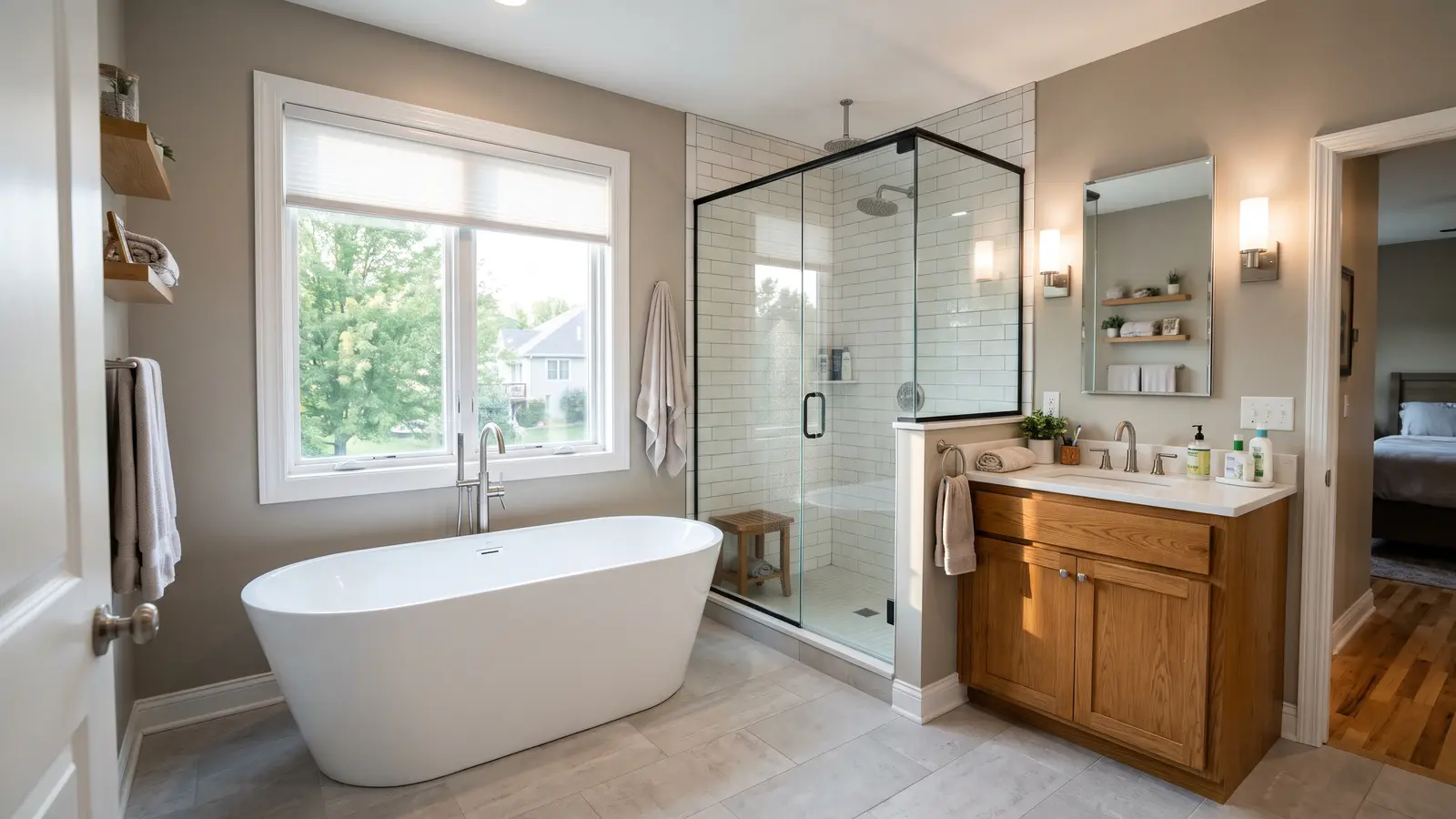
Don't Put Up With a Bathroom You Hate.
A tired, leaky or hard-to-use bathroom only gets more expensive to ignore. Get a free, written quote and a real plan.
- Calls answered 24/7
- Free, written estimates
- Fort Wayne & nearby