What can you actually do with your budget?
Most people start with a number, not a design. That’s fine, as long as the number and the expectations match. These tiers reflect typical Fort Wayne pricing for a standard 5x8 or 5x10 bathroom, including labor:
| Budget | What it typically covers | What it doesn’t |
|---|---|---|
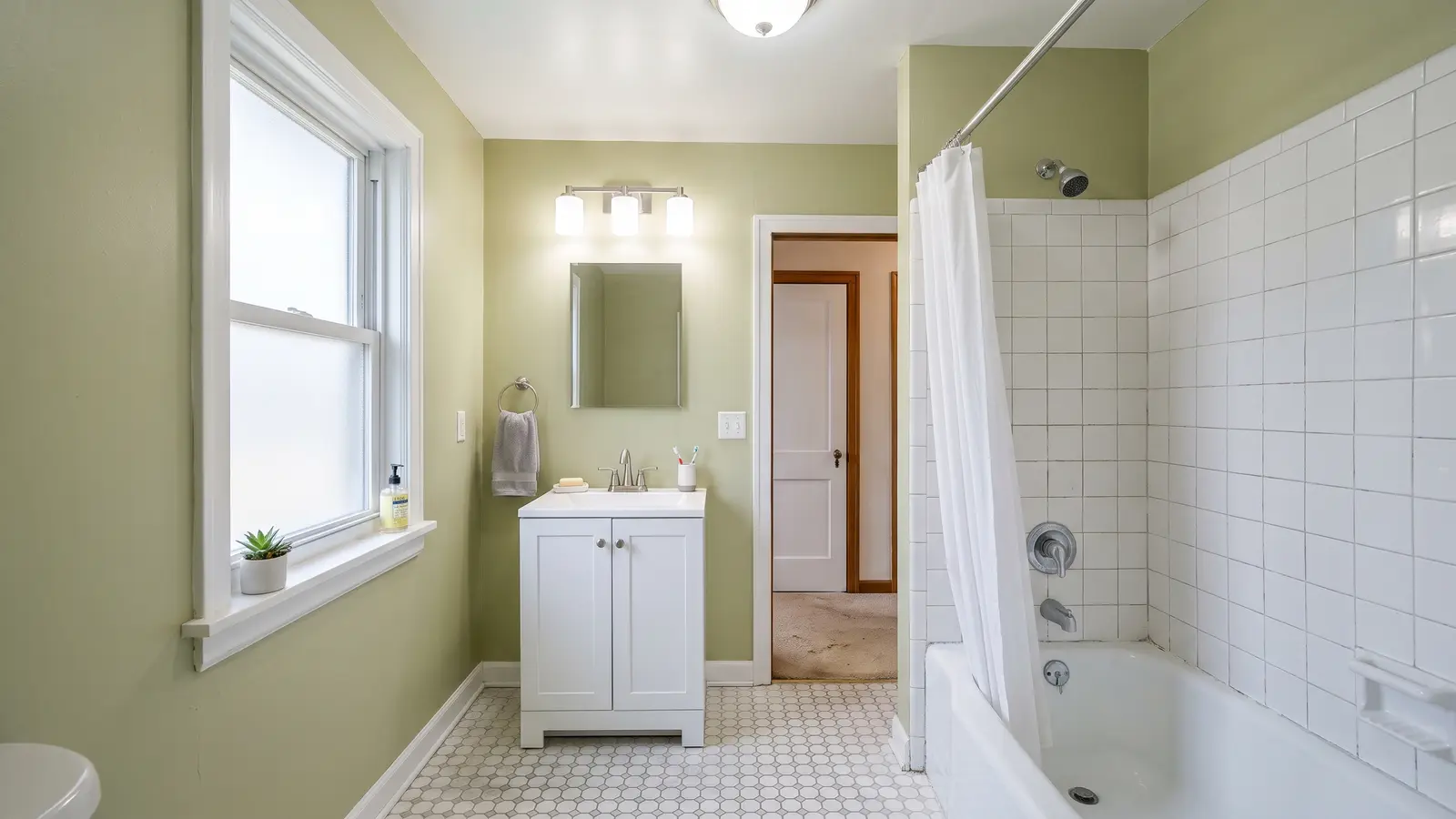
| About $5,000 | Vanity and top, faucet, toilet, mirror, light, paint, reglazed tub or new accessories | New shower walls, tile, plumbing changes |
| About $10,000 | Same-layout remodel: panel shower or tub surround, new tub or shower base, vanity, toilet, vinyl or tile floor | Fully tiled shower, custom glass, moving drains |
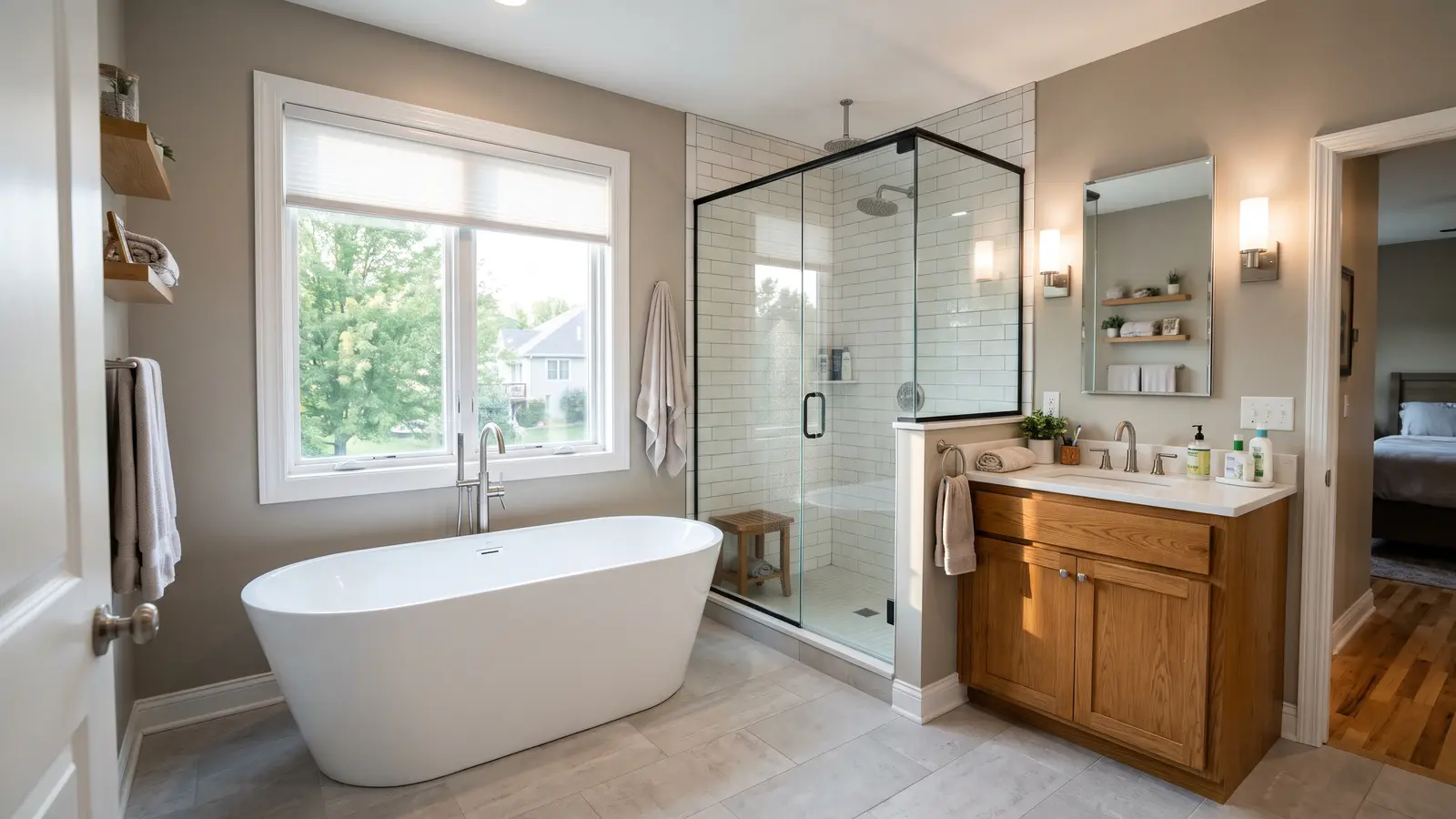
| About $20,000 | Full gut remodel: tiled shower or tub surround, tile floor, new vanity, lighting, vent fan, plumbing updates in the same layout | Major layout changes, luxury stone, curbless conversions with floor work |
| $25,000+ | Layout changes, curbless walk-in showers, primary bath upgrades | — |
For context, This Old House’s Fort Wayne cost data puts the average remodel at roughly $16,000 to $31,000. See our full bathroom remodel cost guide.
What does $5,000 get you?
At $5,000 you’re refreshing the bathroom, not remodeling it. A refresh is worth doing when the shower or tub is still sound and you mostly dislike how the room looks.
- New vanity and top. A stock 30–36 inch vanity with an integrated top changes the room more than anything else at this price.
- Faucet, mirror and light. Small items that make a dated bath feel current.
- New toilet. A comfort-height model is a real daily improvement.
- Tub reglazing. It brings a worn but solid tub, especially an old cast-iron one, back to a clean white finish.
- Paint and caulk. Fresh caulk around the tub and vanity makes a bigger difference than people expect.
What $5,000 won’t do is fix a failing shower, a soft floor or a leaky surround. Putting new paint over those problems just hides them for a while.
What does $10,000 get you?
$10,000 is enough for a real remodel of a small bathroom, if you’re disciplined about two things:
- Keep the layout. The toilet, vanity and shower or tub stay where they are.
- Choose panels over tile in the wet area. An acrylic or solid-surface wall system costs less and installs in days. We compare the options in acrylic vs. tile showers.
A typical $10,000 project: remove the old tub and surround, then install a new tub with a panel surround or a replacement shower, plus a new vanity, toilet and floor, with the plumbing reconnected in place.
What does $20,000 get you?
At about $20,000, most Fort Wayne hall baths can be fully remodeled:
- A fully tiled shower or tub surround with a niche
- Porcelain tile flooring
- A new vanity, top, faucet, toilet and lighting
- A properly ducted exhaust fan
- Plumbing updates in the open walls, like replacing old galvanized supply lines
- Permits and inspections
This is also the budget where a tub-to-shower conversion with tile fits comfortably.
Where should you save, and where should you spend?
Save on:
- The vanity. Stock vanities have come a long way. Put the difference into the shower.
- Fixtures. Mid-range faucets from major brands perform as well as designer lines.
- Floor tile. Simple porcelain is durable and affordable.
- Layout. Every drain you don’t move saves money.
Don’t skimp on:
- Waterproofing. It’s invisible once the tile goes up, and it’s the reason the shower doesn’t fail in five years.
- The vent fan. A quiet, properly sized fan ducted outside protects everything else from moisture.
- Fixing what’s behind the walls. Soft subfloor and corroded pipe only get worse once the room is closed back up.
- The valve. It sits behind the wall for decades. Use a good pressure-balancing valve.
Should you refinish or replace the tub?
| Refinish (reglaze) if… | Replace if… |
|---|---|
| The tub is solid, just stained or a dated color | It’s cracked, leaking or rusted through |
| It’s a heavy cast-iron tub worth keeping | The surround or wall behind it is failing |
| You’re keeping the existing surround | You want a walk-in shower instead |
Reglazing is a budget move. Replacing makes sense when the problem goes deeper than the surface. More on that on our bathtub replacement page.
Which budget mistakes cost the most later?
- Tiling over a failing surround. New tile on a wall that’s already wet just traps the moisture.
- Skipping the vent fan. Fort Wayne winters mean long, steamy showers with windows shut. Without a fan ducted outside, paint peels and mold grows, no matter how nice the tile is.
- Choosing the cheapest valve. It’s buried behind the wall. Replacing it later means opening the finished wall.
- Changing your mind mid-job. A tile or vanity switch after ordering costs restocking fees, waiting time and labor.
- Ignoring a soft floor. A spongy spot by the toilet or tub usually means rotted subfloor. Fixing it during the remodel costs far less than after it fails.
Does a cheaper remodel still add value?
A clean, functional bathroom matters more to buyers than expensive finishes. In most Fort Wayne neighborhoods, a well-done $10,000–$20,000 hall bath with a solid shower, good lighting and a working vent fan does more for resale than an over-the-top primary bath. Spend where it makes the bathroom work better, and keep the finishes simple and durable.
What’s the cheapest way to replace a shower?
Keep it in the same footprint, use a matching shower base and a panel wall system, and choose a standard sliding or pivot door. That avoids moving the drain, skips tile labor and doesn’t need custom glass. In Fort Wayne that typically lands around $5,500–$8,000.
How do you stretch your budget without regrets?
Make every decision before demolition, get an itemized quote, and ask the contractor to price two options side by side, like panels vs. tile or a stock vs. semi-custom vanity, so you can see exactly what each upgrade costs. Tell us your budget and we’ll show you what fits it.